

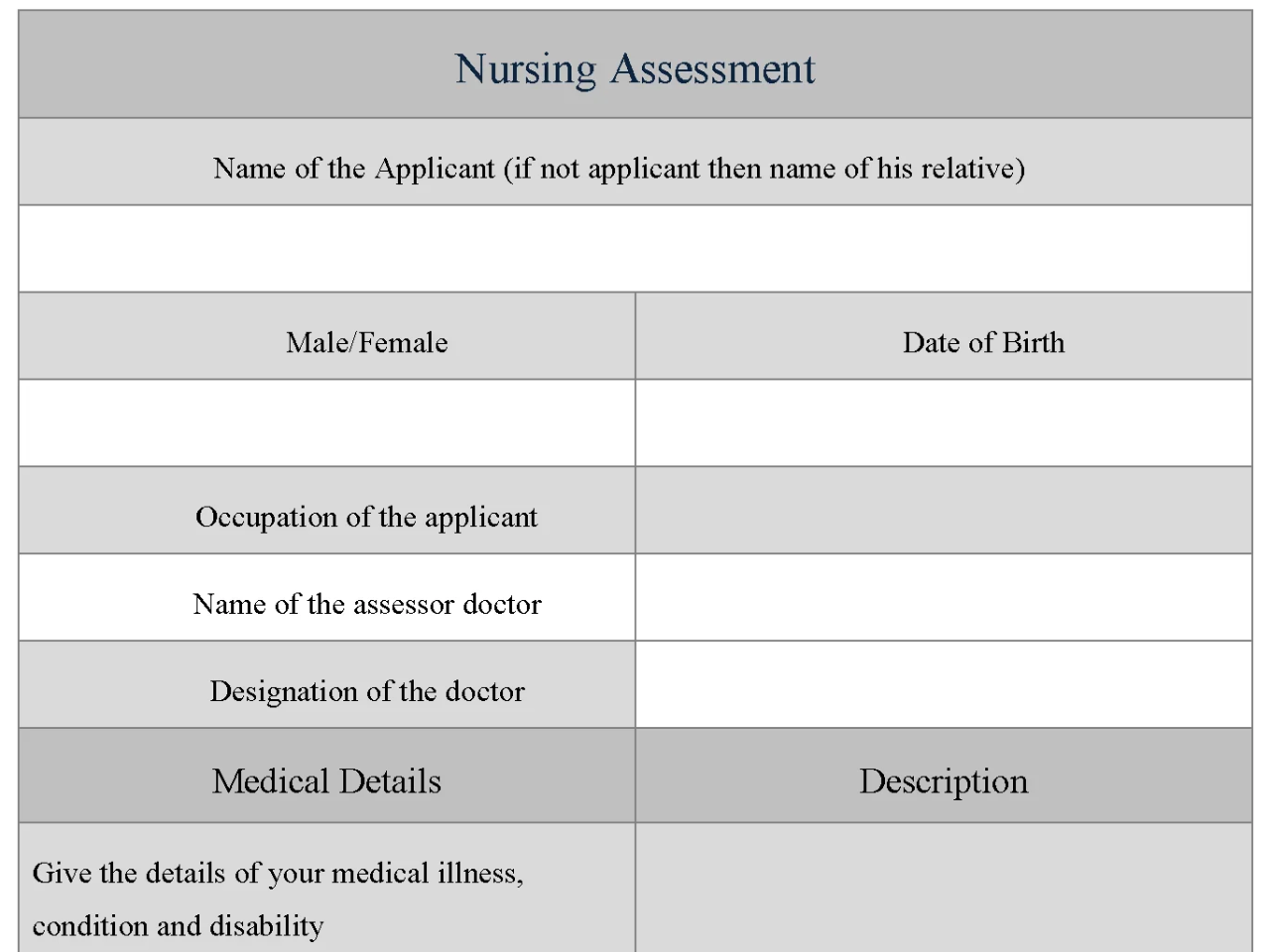
When planning a patient’s care, nursing assessment forms come in handy in establishing the baseline data and also the health condition of the patient. The nursing assessment form can be either in form of a questionnaire or a checklist. The assessment form is easy to understand and to fill. Here is a sample nursing assessment form.


You can Download the Nursing Assessment Form post; customize it according to your needs and Print. Nursing Assessment Form is either in MS Word and Editable PDF.
Download Nursing Assessment Form for only $6.54
Buy Now: 6.54 USDIf you are having problems downloading a purchased form, please Contact Us and include your receipt number and exact name of the form you purchased and I’ll email you a copy.
Absolutely! We offer complimentary editing services for any purchased forms to ensure they meet your specific needs. If you require a brand new form, our team can design one tailored to your specifications at an affordable price.

Features:
Patient Information:
Includes essential personal details such as name, age, gender, and also contact information.
Medical History:
A section for documenting past medical conditions, surgeries, allergies, and also current medications.
Vital Signs:
Fields to record vital signs such as blood pressure, heart rate, respiratory rate, and temperature.
Physical Examination:
Includes sections for assessing different body systems (e.g., cardiovascular, respiratory, musculoskeletal) and noting any abnormalities.
Symptom Assessment:
A space to document symptoms like pain, fatigue, nausea, or shortness of breath, with details on severity and duration.
Mental Health and Cognitive Function:
Includes a section to assess mental and cognitive status, including mood, memory, and also alertness.
Functional Assessment:
Assesses the patient’s ability to perform activities of daily living (ADLs), such as dressing, bathing, and also eating.
Nutrition Assessment:
A section to evaluate the patient’s nutritional status, including dietary habits, weight, and also appetite.
Skin Condition:
Checks for any skin issues such as wounds, rashes, or pressure ulcers.
Plan of Care:
Space for outlining the nursing care plan, including goals, interventions, and follow-up actions.
Patient Education:
Sections for noting any patient education provided on their condition, treatments, or medications.
Signature and Date:
A field for the nurse to sign and date the assessment form, confirming the evaluation has been completed.
Benefits:
Comprehensive Patient Overview:
Provides a detailed and also holistic view of the patient’s health, helping to ensure that all aspects of care are addressed.
Standardization:
Standardizes the assessment process, ensuring that critical information is consistently collected for every patient.
Efficient Documentation:
Facilitates efficient and organized documentation of patient health information, reducing the risk of errors and also omissions.
Improved Communication:
Enhances communication among healthcare providers by creating a clear, concise record that can be easily shared.
Personalized Care:
Helps nurses identify patient needs and tailor a care plan that addresses individual health conditions and also concerns.
Early Detection of Issues:
Assists in identifying potential health problems early, allowing